


RAIL GHOST
Pioneering the
Autonomous
Rail Yard

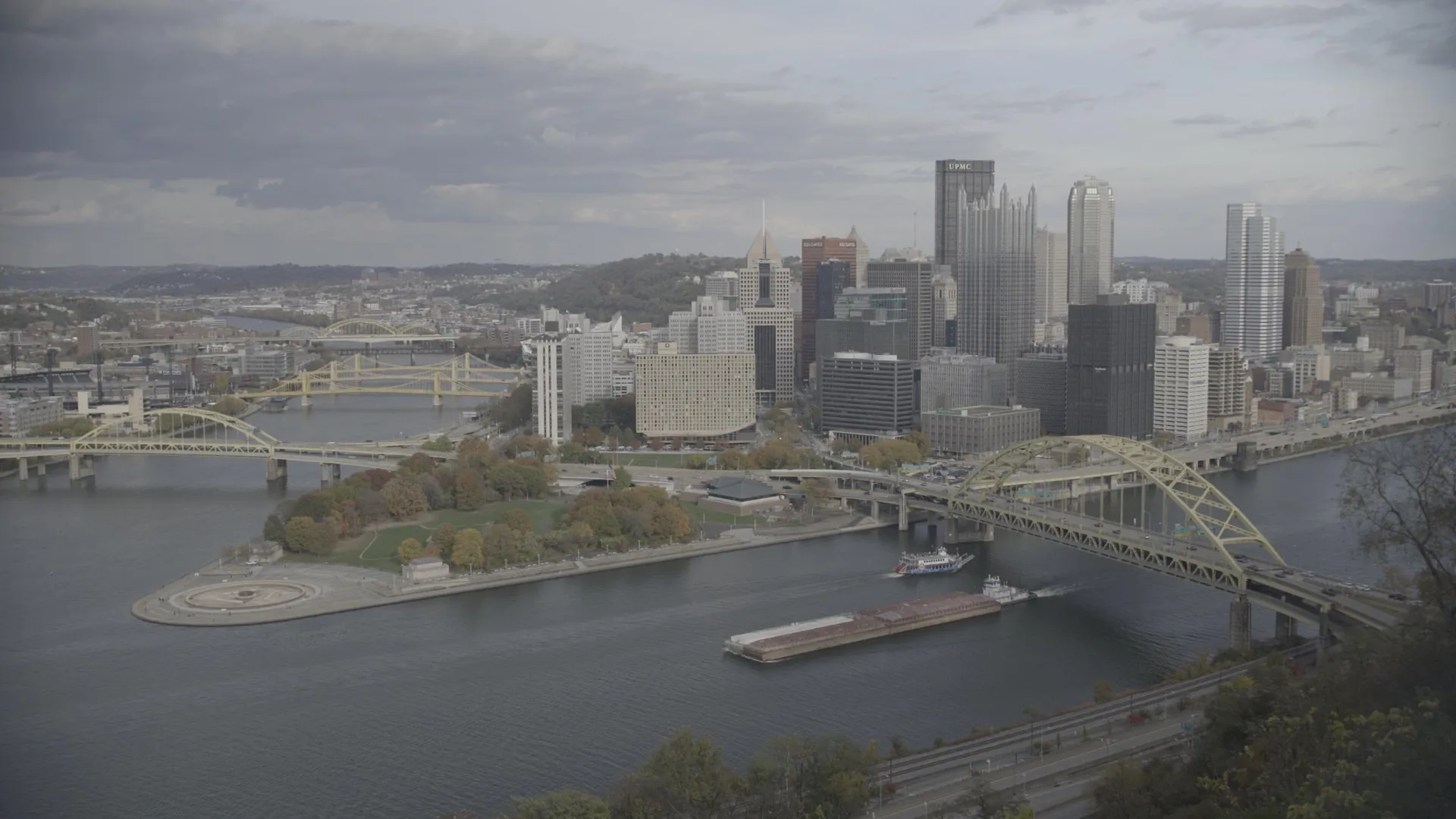
THE REALITY
How Things Work Today
“The challenge wasn’t just inspection. It was creating a better way to bring visibility, consistency, and intelligence into the yard.”
Every day, railroads rely on inspections to keep trains moving safely and reliably.
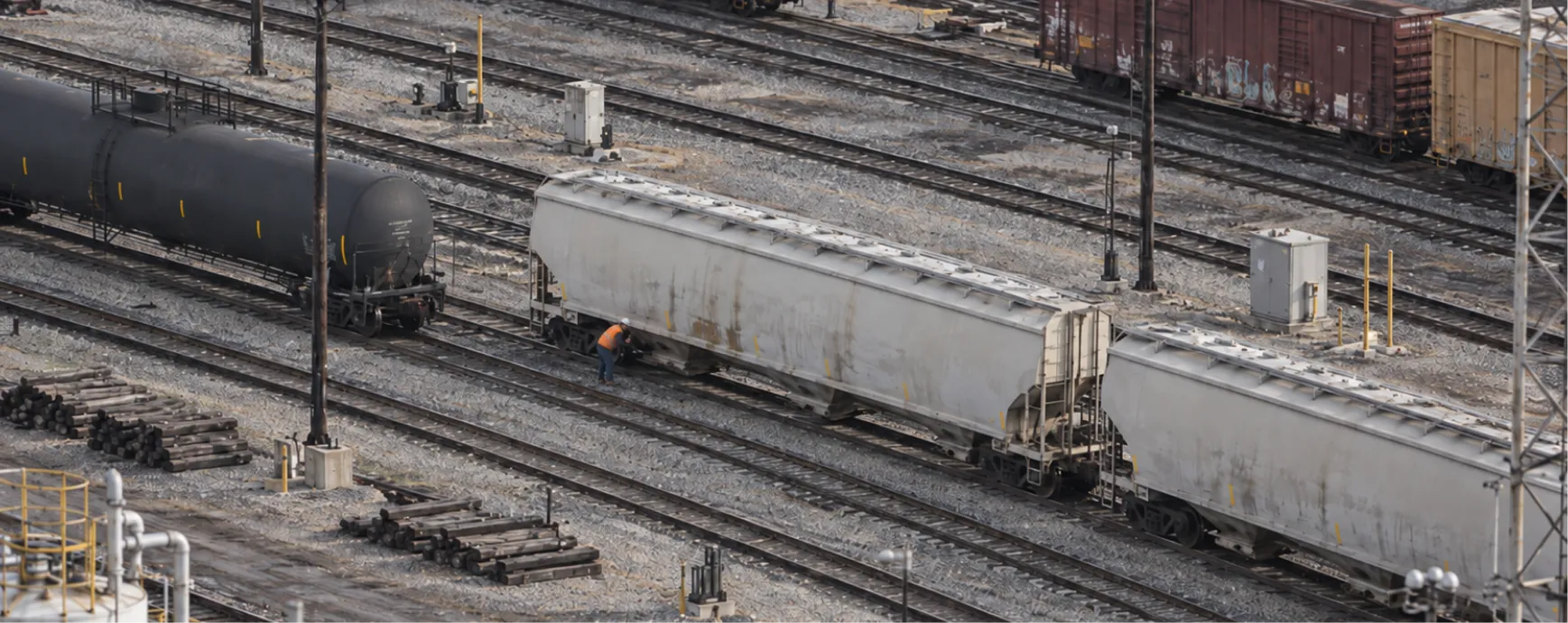
Much of that work still depends on people walking long cuts of railcars, visually inspecting components, listening for air leaks, verifying brake conditions, and documenting findings under tight operational timelines. It is critical work, but it is also repetitive, physically demanding, and difficult to standardize across shifts, crews, and locations.
What makes the challenge even harder is the environment itself.
Rail yards are dynamic operating systems. Weather changes. Visibility changes. Trains move. Every inspection must be performed within strict operational and safety constraints. Any solution that requires the railroad to change how it works is unlikely to scale.
THE OPPORTUNITY
How They Could
Work Tomorrow
RailGhost began with a focused question:
How might automation help simplify individual inspection workflows?
As the team worked alongside customers and operators, that question evolved. What emerged was a much larger opportunity.
Rather than automating a single task, could a mobile platform bring intelligence directly to the places where work happens most frequently—and where visibility is often hardest to achieve?
This shift changed the conversation. The goal was no longer simply automation. The goal became creating a trusted operating layer that combines movement, sensing, evidence capture, and operator validation into a repeatable workflow.
90M
INSPECTIONS ANNUALLY
1.6M
RAIL CARS IN SERVICE
100+
RAILCARS SUCCESSFULLY NAVIGATED DURING TESTING
10K+
TRAINING IMAGES CAPTURED AND COUNTING
THE BREAKTHROUGH
The Innovation
“This isn’t a lab robot. It has to work in the reality of a rail yard—on existing track, around active operations, and in the places where the work actually happens.”
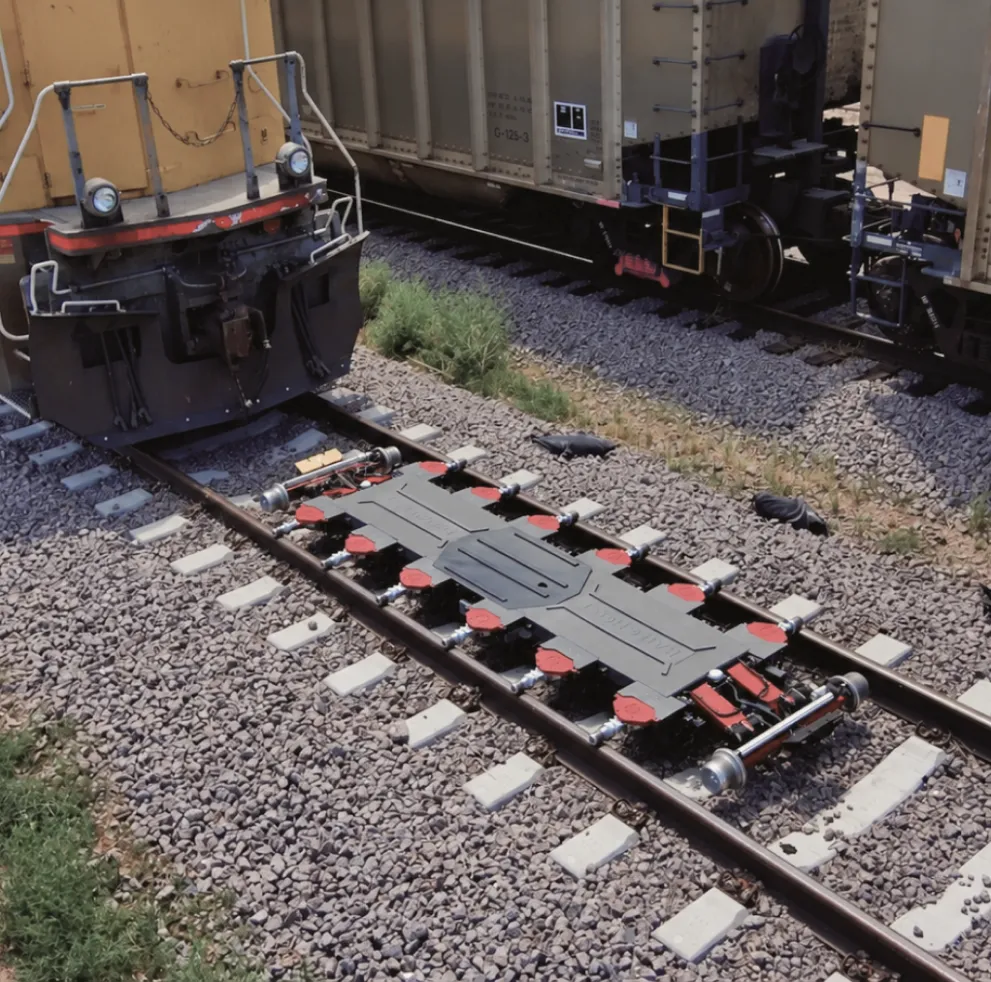
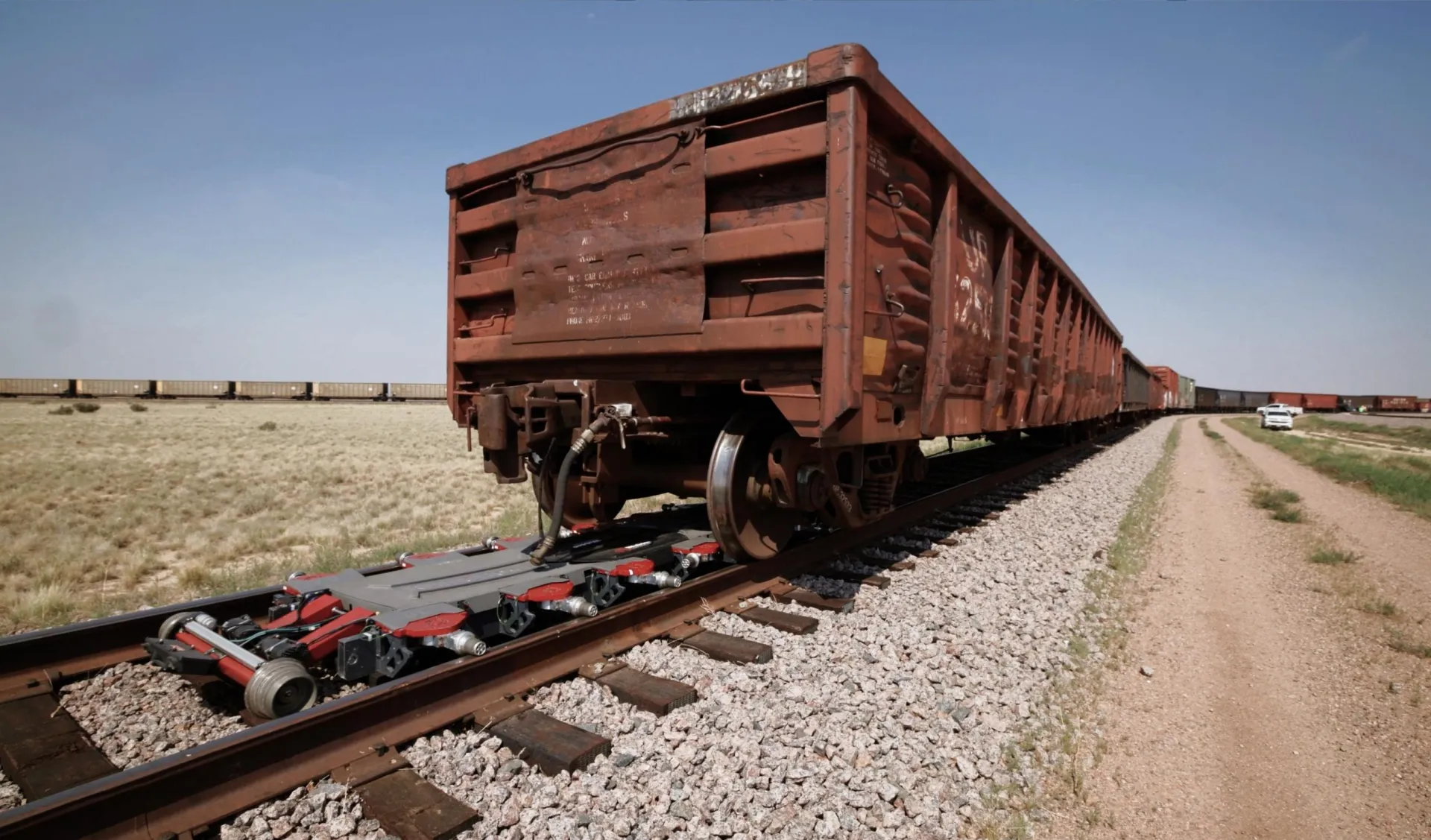
RailGhost is a rail-based robotic platform designed to execute inspection missions directly within active rail environments.
Rather than positioning technology outside the workflow, RailGhost becomes part of it. The platform combines mobility, perception, autonomy, inspection software, and operator workflows into a system specifically designed around the realities of rail operations.
Most importantly, it works within the railroad—not around it.
“This isn’t a lab robot. It has to work in the reality of a rail yard—on existing track, around active operations, and in the places where the work actually happens.”
By bringing sensing and intelligence directly to the train, RailGhost helps shift inspections from manual search-and-find activities toward evidence-driven, mission-based workflows.
THE RAILGHOST
Key Capabilities
RailGhost was designed as a platform, not a point solution.
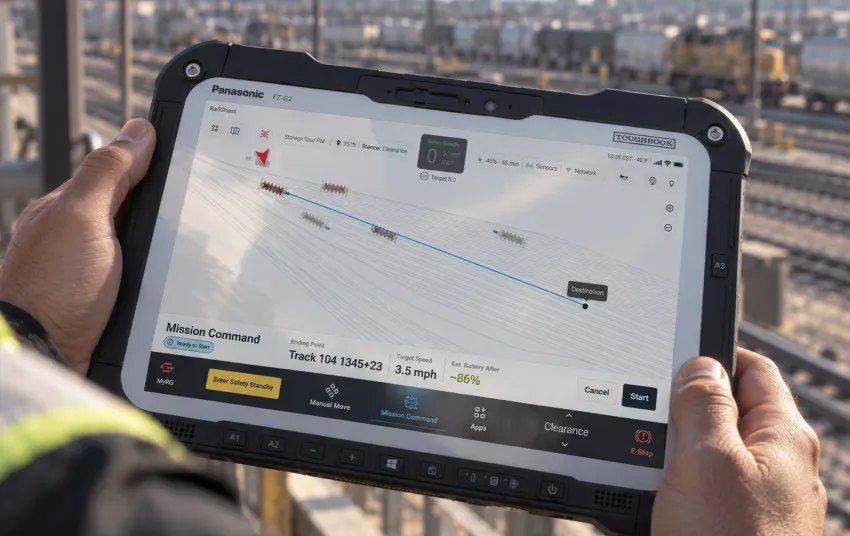
Operators define the mission. RailGhost executes the work-flow.
Rather than requiring continuous manual control, RailGhost is designed around repeatable inspection missions. Operators can plan, launch, monitor, and refine inspections while the platform performs the work consistently and at scale.
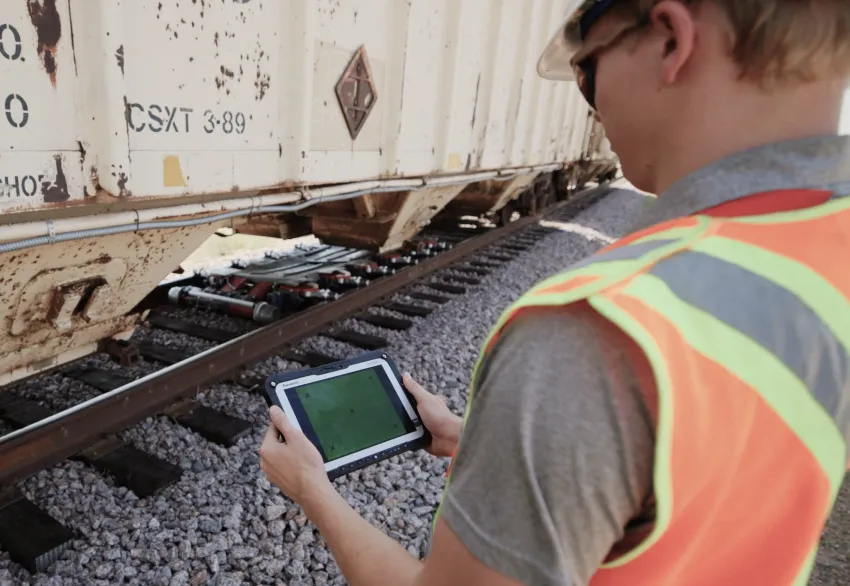
Inspection becomes a workflow—not a manual process.
The Human Machine Interface (HMI) provides a centralized environment to:
- Create and launch inspection missions
- Monitor mission progress in real time
- Review images, sensor data, and inspection evidence
- Validate findings and provide feedback
- Manage one or multiple robot systems through a single interface
Every interaction is designed to make inspections easier to execute, review, and scale across operations.
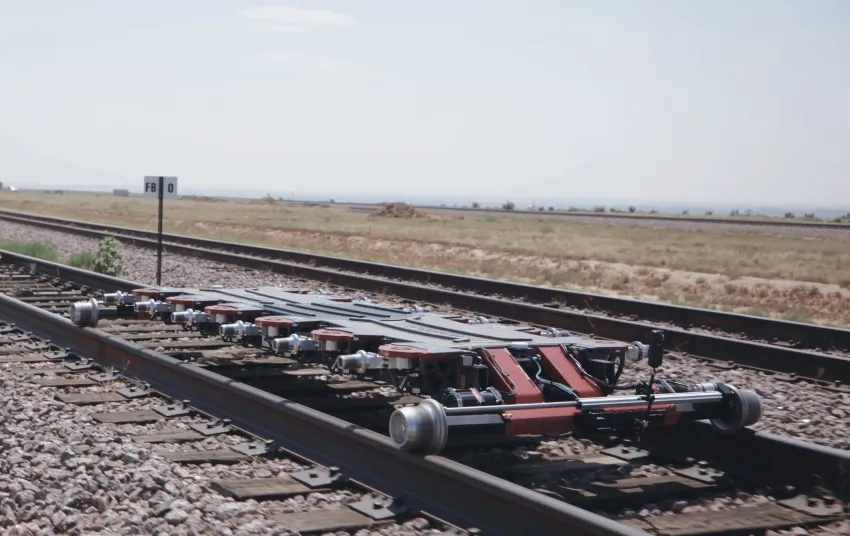
Go where the rail network goes.
Built for rail environments, RailGhost travels directly on existing track infrastructure. The platform can access inspection routes and operating environments that are often difficult, time-consuming, or disruptive to reach through traditional methods.
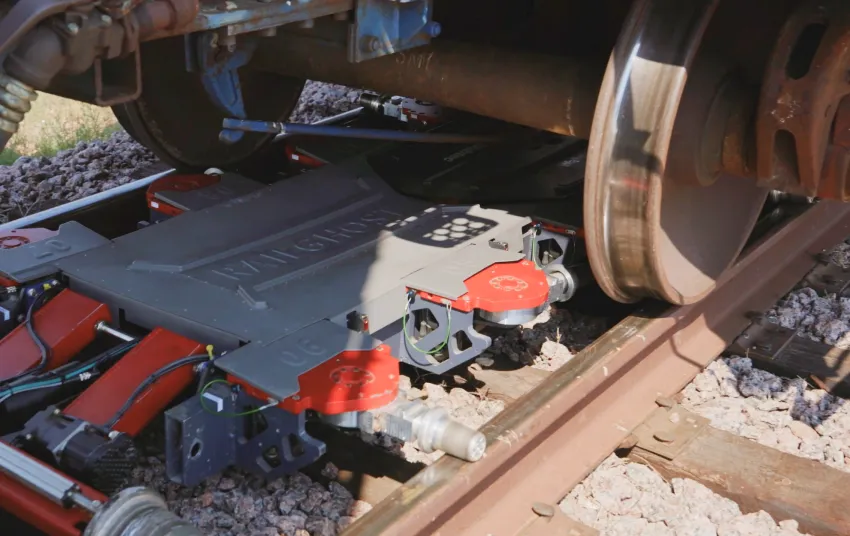
Gain access to inspection viewpoints others can't.
RailGhost captures inspection data from locations that are difficult to inspect consistently through conventional methods, including:
- Undercarriage components
- Between-car connections
- Hard-to-reach mechanical systems
- Restricted or limited-access inspection zones
This expanded visibility creates new opportunities for condition assessment, validation, and evidence collection.
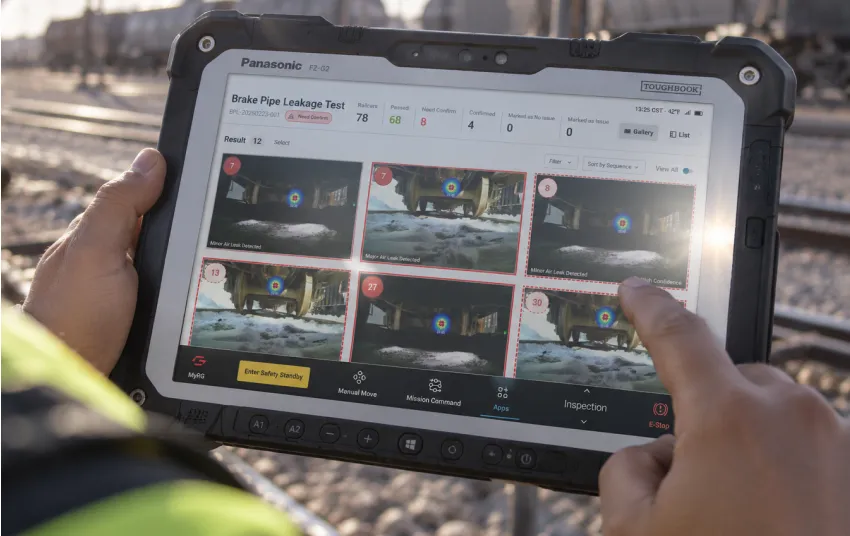
Findings backed by evidence.
RailGhost captures and organizes inspection information throughout each mission, including:
- High-resolution imagery
- Sensor-derived inspection data
- Automated findings and alerts
- Historical inspection records
Inspection results are presented through a structured review workflow, helping operators make informed decisions with confidence.
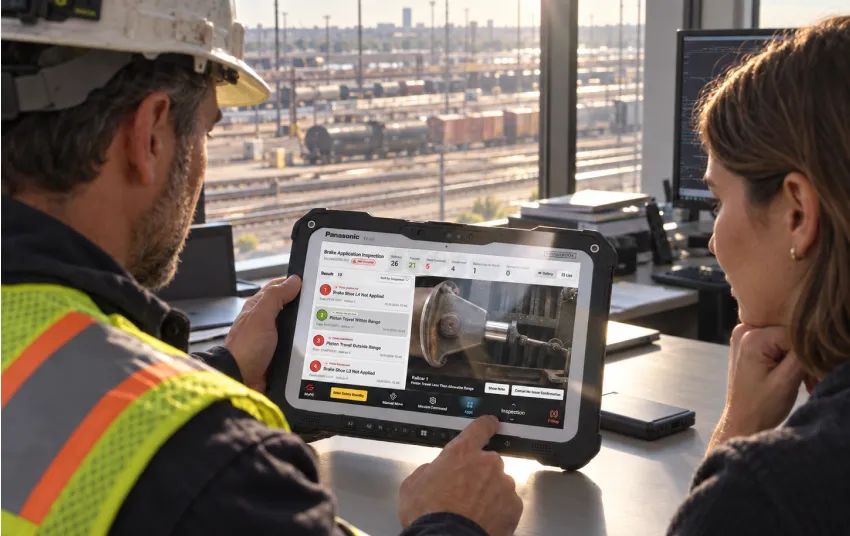
Automation strengthens operator decision-making.
RailGhost combines automated inspection capabilities with operator oversight throughout the inspection process. Findings remain transparent, reviewable, and actionable—allowing teams to accelerate inspections while maintaining confidence in operational decisions.
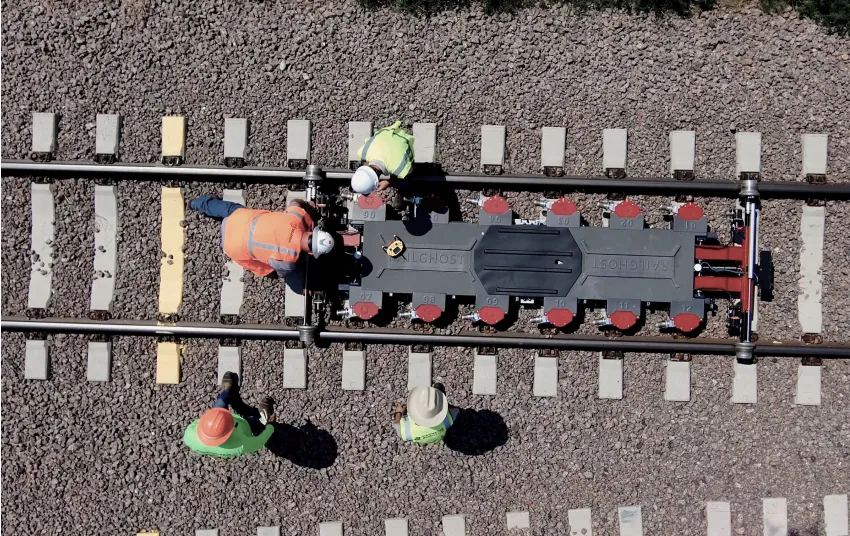
Built for today's inspections. Ready for tomorrow's operations.
RailGhost was designed as a scalable platform capable of supporting future applications beyond inspection, including:
- Infrastructure monitoring
- Asset condition assessment
- Operational support workflows
- Autonomous maintenance activities
- Emerging rail automation use cases
The same foundation that powers RailGhost today can be extended to new missions as customer needs evolve.
THE IMPACT
The Potential to
Make a Change
While development continues, RailGhost is already demonstrating the potential to create meaningful operational value.
Areas of interest include:
- Reduced manual walking and repetitive inspection activity
- Improved consistency and repeatability
- Better inspection evidence and digital visibility
- Greater focus on validation and exception management rather than manual search activities
The strongest signal of progress may be how customer conversations have evolved. The discussion is no longer centered around whether the robot can operate. It is increasingly focused on where it fits, how it integrates into workflows, and what value it can create within a yard operation.