Rewiring Europe’s Freight Rail for a Digital Future

by Daniel Gradl, President of Brakes & Couplers at Wabtec
The European freight rail market stands at a defining moment.
The industry is under pressure to move more freight, improve reliability, and accelerate decarbonization, all while competing with trucking, that continues to dominate goods movement. The challenge is that many core rail processes remain manual, limiting efficiency, scalability, and safety.
Digitalization is essential for the industry to move forward.
At Wabtec, we view this as a foundational shift. A transformation will redefine how freight rail in Europe operates, connects, and delivers value across the supply chain.
Why Now?
Freight rail has long faced structural challenges, from aging infrastructure to rising costs and growing pressure to shift freight off the roads. What has changed is the maturity of digital and automation technologies, paired with the increasing alignment across the industry to adopt these solutions.
Technologies such as digital coupling, automated train composition, and real-time data platforms are advancing rapidly, with key elements moving through testing, validation and early deployment. At the same time, the regulatory environment, particularly in Europe, is becoming more favorable, with stronger collaboration around standards, funding, and deployment frameworks.
This convergence of technological progress and ecosystem alignment marks a turning point for freight rail.
Digital Coupling: A Platform for Transformation
At the center of rail operations is a simple but essential task: coupling wagons.
Each day, this process is performed hundreds of thousands of times, primarily manually. It is time-consuming, physically demanding, and frequently carried out in hazardous conditions.
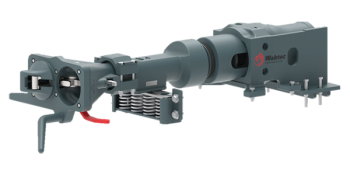
Digital Automatic Coupler (DAC) is a technology under development that can fundamentally change this dynamic.
By enabling automatic mechanical, electrical, and digital connections between wagons, DAC could remove the need for manual intervention. The benefits could be significant over time, providing improved safety, faster train formation, and reduced dwell times in yards.
More importantly, DAC could do more than modernize one task. It could create a digital backbone for the entire freight system.
With a connected train, operators could enable automated brake testing, streamline train composition, and integrate yard operations into a unified digital workflow. DAC is not simply an upgrade. It is intended to serve as the foundation for broader transformation.
From Manual Operations to Intelligent Yards
As digital technologies scale, the freight yard itself is evolving.
In the yard of the future, operations are expected to become increasingly data-driven, automated, and highly coordinated. Train composition could become largely automated. Coupling and brake testing could occur with reduced manual intervention. Locomotives may be remotely controlled, and AI-enabled systems could optimize shunting movements in real time.
The shift is clear: from fragmented, manual processes to integrated, intelligent operations.
The promise of this transformation is practical and tangible. By reducing human exposure to high-risk manual tasks, intelligent yards can make rail operations safer. By speeding up workflows and making them more predictable, they can help freight move more efficiently. And by getting more out of existing infrastructure and yard capacity, they can create room for growth without relying only on physical expansion.
These advances create a more resilient and responsive rail network that is capable of meeting rising demand.
Turning Data into a Strategic Asset
Digitalization is not only about automation, but also visibility and insight.
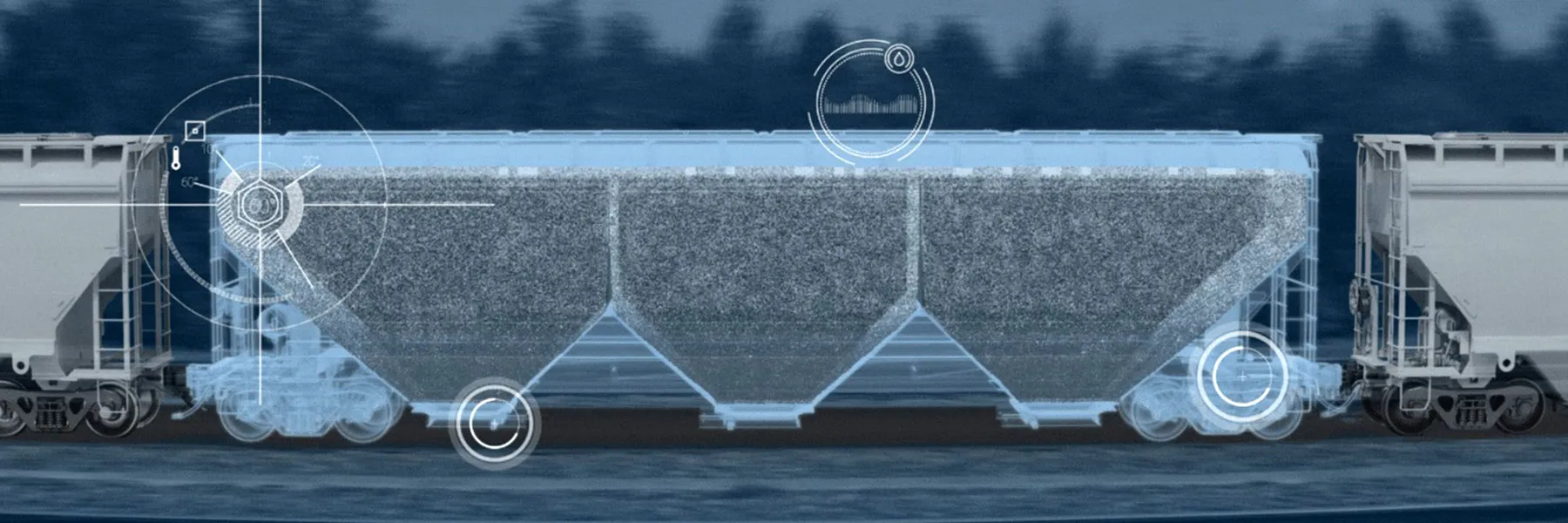
Through telematics, railcars become connected assets, equipped with sensors and communication systems that provide real-time data on location, condition, and performance.
For operators, this enables smarter fleet management, predictive maintenance, and faster incident response. For shippers, it delivers end-to-end visibility, more accurate arrival times, and improved handling of sensitive cargo.
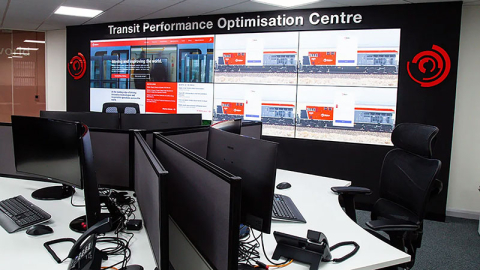
When integrated across networks, these data streams power advanced analytics and AI-driven optimization, helping operators reduce costs, improve reliability, and make better decisions.
In this new environment, data is no longer a byproduct of operations. It is a strategic differentiator designed to enhance the user’s ability to make more informed decisions.
Scaling Through Integration and Partnership
To realize freight rail’s digital transformation in Europe, it cannot happen in isolation.
Rail networks are complex ecosystems, spanning operators, asset owners, and geographies. For digital solutions to succeed, they must be interoperable, scalable, and aligned with real-world operations.
Wabtec is taking a phased approach by building from visibility to insight to automation, so customers can unlock value while managing risk and complexity.
The company’s recent acquisition of Dellner Couplers further strengthens this strategy. By combining Dellner’s coupling technologies with Wabtec’s leadership in braking and digital systems, the company is expanding the ability to deliver integrated solutions and accelerate development of DAC-ready platforms.
A Vision for the Future
Looking ahead, the future of freight rail will be defined by connectivity, intelligence, and automation.
Wabtec expects telematics to become increasingly standard across freight fleets in the future, delivering real-time visibility into fleet location, mileage, and safety conditions. Predictive maintenance is expected to scale across networks, reducing downtime and improving asset performance. Yards are expected to operate with increasing autonomy, with digital coupling and AI-enabled systems orchestrating wagon movement and train preparation.
These advancements are expected to improve operational efficiency, while also helping to address labor shortages, reduce costs, and advance sustainability goals by making rail more competitive.
Unlocking the Potential of Digital Freight
Realizing this future requires more than technology. It requires alignment.
The full potential of digital freight will depend on common standards, trusted data sharing, and true interoperability across the rail ecosystem. It will require collaboration among industry players, policymakers, and technology providers.
Wabtec is committed to taking a leading role in this transformation, working with customers and partners to deliver a smarter, safer, and more sustainable freight network.
Because the future of rail will not be defined by incremental change.
It will be defined by connectedness.